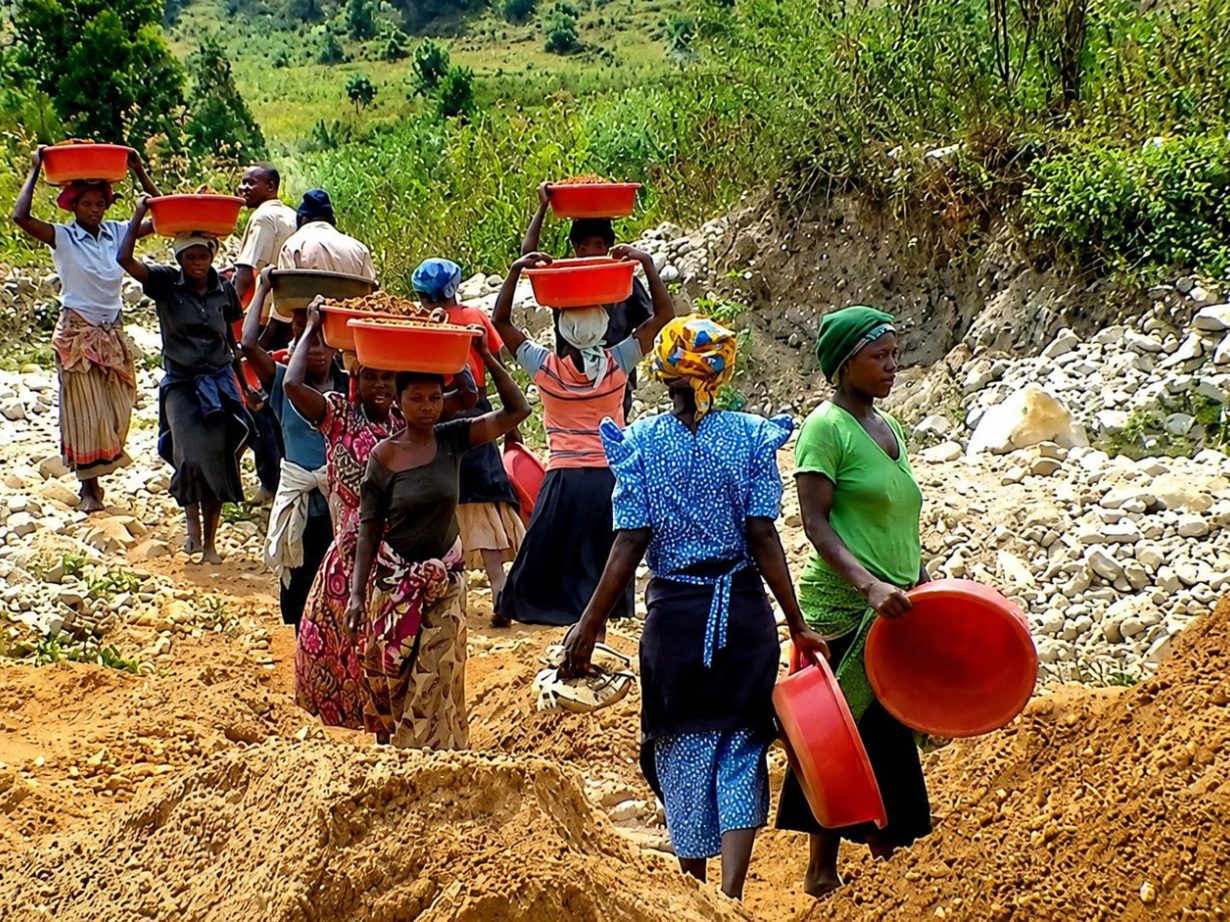
Artisanal and small-scale miners in Uganda have asked the government to simplify the process of obtaining mining licences and increase technical assistance to operators, saying complicated and costly requirements are forcing thousands of miners to remain outside the formal sector.
The Uganda Association of Artisanal and Small-Scale Miners says the industry plays an important role in Uganda’s economy but continues to operate with limited technical and institutional support.
Artisanal and small-scale mining is estimated to directly employ more than 600,000 people across Uganda, making it an important source of income for many households.
Despite its contribution to employment and mineral production, an estimated 85% of artisanal miners operate without licences.
Industry representatives say expensive and complicated licensing requirements are among the major reasons many miners remain informal.
Licensing Costs Keep Small Miners Informal
Kenneth Asiimwe, Chief Executive Officer of the Uganda Association of Artisanal and Small-Scale Miners, said some requirements placed on small operators are too expensive compared with the size of their investments.
He pointed particularly to the cost of environmental assessments required before some mining activities can be approved.
“You’re telling a person that they’re supposed to dig a pit of 10 metres deep, but then you’re telling them to spend Shs30 million on doing an environmental impact assessment for a 10-metre pit,” Asiimwe said.
He argued that faced with such costs, some miners decide it makes more economic sense to continue operating informally rather than spend much of their available capital trying to meet licensing requirements.
According to Asiimwe, this creates a situation where miners continue operating outside the formal system while attempting to avoid enforcement authorities.
He also questioned whether the financial requirements imposed on artisanal miners are realistic considering the investment limits under which many of them operate.
“The law says that an artisanal miner is allowed to invest not more than Shs300 million. So, if this person had Shs50 million and NEMA wants Shs30 million for an environmental impact assessment, do you think it makes sense? Of course not,” he said.
Asiimwe said reviewing some of these requirements could encourage more miners to obtain licences and operate legally.
The association is also calling for greater recognition of local artisanal miners and more equal opportunities within an industry that continues to attract foreign investment.
Miners Want Technical Support
Beyond licensing, artisanal miners are asking the government to provide stronger extension and technical services.
They argue that mining should receive structured technical assistance similar to support available to operators in other productive sectors of the economy.
Such assistance could include training in safer mining methods, mineral identification, environmental management, modern equipment and improved processing techniques.
Industry stakeholders believe stronger technical support could help reduce accidents while increasing productivity and the value of minerals produced by small-scale operators.
New Training Centre Planned for Isingiro
The push for reforms comes as mining stakeholders begin developing a formal training curriculum specifically targeting artisanal and small-scale miners.
With support from GIZ, Woodcross Resources plans to establish the Ujuazi training facility in Kikagate, Isingiro District.
The centre is expected to provide practical mining education and professional skills to miners from different parts of Uganda.
Kwesi Kuteesa, Director of Corporate Affairs at Woodcross Resources, said the initiative could give miners an opportunity to receive recognised training and certification.
“Miners from different parts of the country will be able to come, train, be certified and be licensed under the Ministry of Education, and we hope this will improve livelihoods for miners, lead to better pay and enhance national recognition by government,” Kuteesa said.
The initiative is expected to help professionalise an industry where many participants currently learn mining skills informally through experience.