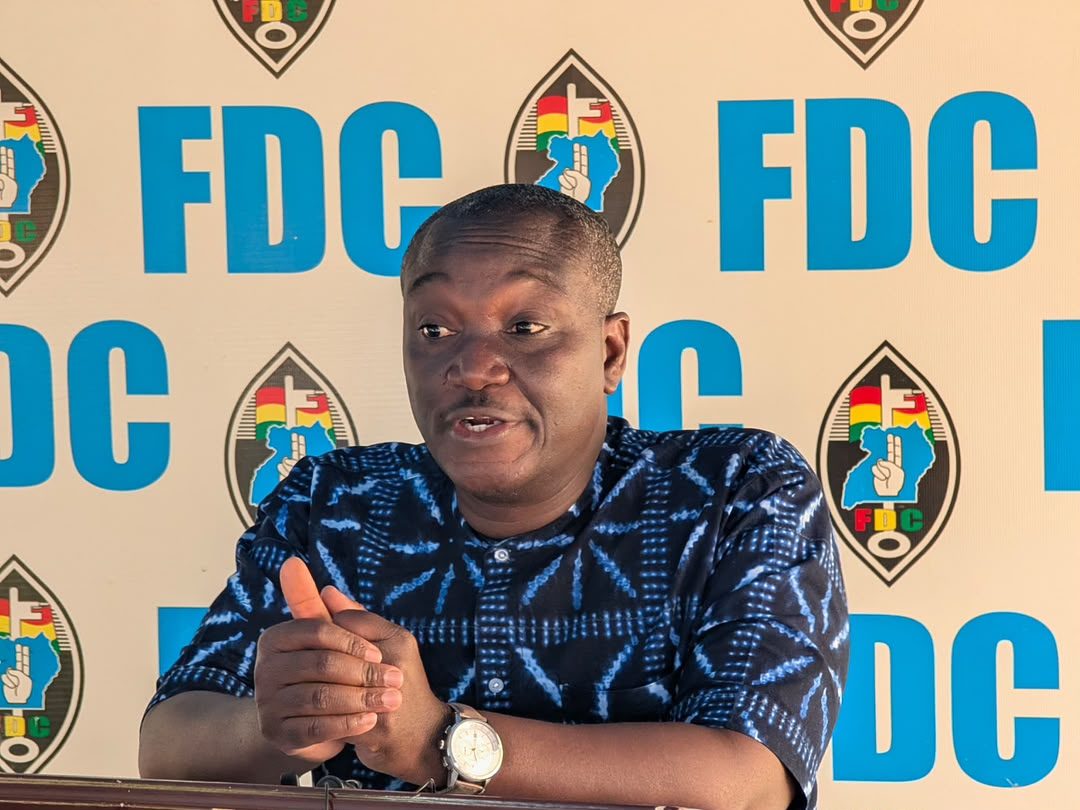
The Forum for Democratic Change (FDC) has criticised the conduct of the recently concluded Local Council I (LCI) elections, alleging widespread violence, intimidation and electoral malpractice while calling on the Electoral Commission to investigate complaints raised across the country.
Speaking during a media briefing in Kampala on Monday, FDC Vice Chairperson Robert Centenary congratulated Ugandans who participated in the village elections but said the exercise failed to meet the standards of a free and credible democratic process.
“Despite enormous challenges, citizens showed up and demonstrated their commitment to having a voice in the governance of their communities,” Centenary said.
However, the party maintained that the elections suffered from the same shortcomings that have characterised previous polls.
“These elections were no different from every other election Uganda has held in recent years. The same violence. The same intimidation. The same vote rigging,” Centenary said.
The opposition party said Local Council I elections are the foundation of grassroots governance and should accurately reflect the will of voters without interference.
According to the FDC, village leadership positions are intended to promote service delivery, unity and community development and should not become contests driven by fear or abuse of state power.
The party specifically criticised the conduct of the lining-up voting system, arguing that even a transparent voting method was allegedly manipulated.
Under the system, voters publicly line up behind their preferred candidates before votes are counted openly.
Centenary alleged that in some areas presiding officers were arrested before announcing results, while in others election outcomes were altered despite the voting taking place in full public view.
“In some places, results were changed even after people had lined up openly behind a candidate for everyone to see,” he said.
The FDC described the alleged incidents as damaging to Uganda’s democratic image and questioned the credibility of future national elections.
“If a government cannot conduct a simple village election in a way that people can trust, how can it ask citizens to trust the outcome of a national election?” Centenary asked.
The party also disputed claims by the ruling National Resistance Movement (NRM) that it had secured an overwhelming victory.
According to FDC, there were villages where the NRM did not field candidates, while in other areas opposition and independent candidates won.
“The real picture of these elections is far more mixed than the NRM’s sweeping claims suggest,” Centenary said.
The party congratulated its successful candidates for winning under what it described as difficult political conditions and encouraged unsuccessful candidates not to lose hope.
“The struggle for democracy has never been easy, but the truth and the will of the people have a way of coming out in the end,” Centenary said.
FDC called on the Electoral Commission to investigate what it termed credible complaints arising from the elections and to enforce electoral laws impartially.
The party also appealed to Ugandans to remain peaceful while continuing to advocate for reforms aimed at improving the country’s electoral process.
“We call on all Ugandans to remain peaceful, stay vigilant, and continue the struggle for an electoral system that is genuinely free, fair, and credible,” Centenary said.
The party further argued that Uganda deserves elections in which every citizen is able to participate freely, every vote is respected and declared results reflect the will of voters.
The Electoral Commission and the ruling NRM had not responded to the FDC’s allegations by the time of publication.